This blog was written by Isabel Yap Quan-E, a participant of the YELL Conservocation Programme.
Follow Isabel Yap Quan-E’ blog to learn about her experience as a Conservocation Programme participant.
Hello, hear me out — don’t let this article title fool you. It may be unhinged, but I guarantee that the process of grief is essential to growth and development.
This is a personal reflection blog about my time as an intern at Kongsi Coop — a learning process that was not about information, but life lessons. I wish to present this as authentically as possible, straight from the head in my own interpretation. There will be references, strange allegories, moments of cringe, and extremely personal reflection. Ultimately, take my words with a grain of salt and look on the brighter side. Growth is not linear, and it’s certainly not all sunshine and rainbows. I am grateful for Kongsi’s community and working team for being patient, kind, and tolerant enough to see through and facilitate this six-month process.
Let Me Cook — The Learning Experience
Allow me to reintroduce myself: I am an intern (the author of this piece) under the YELL Conservocationship program, working for Kongsi Coop, fresh off graduating, slightly overwhelmed by pressure, with nary a clue about what Kongsi or YELL are. It’s a funny story how I got here — but that’s not the subject of this reflection.
Six months of this program put me on a transformative journey, as the title suggests: grieving the old self, growing from the old self, and coming up with an (unoriginal) fried tofu recipe.
“Prithee! What are the six stages of grief, rather than the theorized five?”
Denial, Anger, Bargaining, Depression, Acceptance, and — unlike what Cruella from the live-action suggests for ‘revenge’ — sources suggest Finding Meaning. For me, this was a genuine “that is that, and this is this” moment.
How does this framework apply to my internship reflection, and what does it have to do with a deep-fried tofu recipe?
Denial
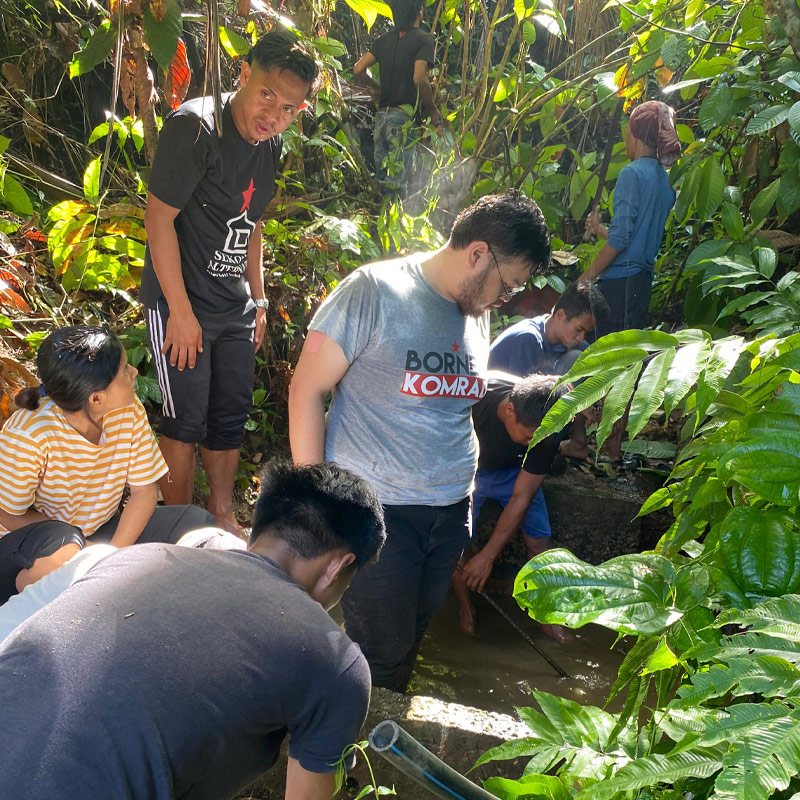
When I first joined Kongsi Co-op, the culture shock was almost overwhelming. Workplace regulations such as plant-based foods only, a strong healthy eating culture (organic, biodynamic foods), zero waste (including packaging disposal), living and working directly next to nature under natural local temperatures, a strong advocacy spirit, and constant movement — physically and metaphorically — were both exciting, challenging, and exhausting for someone who spends at least 12 hours of the 24-hour cycle sleeping.
I will not sugarcoat it: I did not keep up. I scrambled for article ideas, too many but none that seemed to fit their image, tone, or vibes. On top of trying to quickly adapt to their mindset and values, I feared losing my identity in the process. Don’t get me wrong — I agreed with their core beliefs and empathized with Fund A Land’s purpose — but, as some may say about my generation, we can be stubborn, argumentative, and overly defensive of our ways of life. I was all three, with a veneer of “I’ve got this under control, I’d win” — classic denial. Supervisors, I am so sorry for this, but that was the truth.
If I could tell my past self one thing after six months, it would be: “Please stop fear-mongering yourself into thinking you’d lose your sense of identity over differing opinions or personal home issues.” An internship is a place to learn, mess up, struggle to adapt, cry, and repeat. Denial was my pride, my dishonesty with myself, and the fear of losing my opinion while trying to completely align with their values word-for-word in hopes of producing something to write and something to make.
At some point, I did come up with a recipe I had always wanted to try serving at lunch for my colleagues: a Karaage Fried Tofu recipe. I deep-fried it to crisp, glazed it with an overly sour sauce, and thought I had truly cooked — until the feedback came in. Denial was thinking the recipe had to be exactly what I imagined — even at the cost of a messy kitchen, wasted ingredients, and subpar outcomes. Like my growth, the tofu couldn’t be forced into perfection; it had to evolve naturally.
Denial was the denial of change — I was not ready for change, yet I denied the idea of change while simultaneously denying that I was not doing well with the change.
Anger
Anger here was never directed at my host organization or colleagues — they were, as always, fantastic — but I wish I had been honest enough with myself and them to see that more often. Around the middle of the second month, some at-home issues caused me to resent the entire situation, and anger became evident. On top of the denial of change came anger at the circumstances I found myself in: the shift in schedule, the pressure to change my mindset and worldview, personal factors at home, and a sense of helplessness. Isolation from friends and peers didn’t help.
This was likely the darkest stage for me, even if it was the shortest in duration. Anger, frustration, and resentment come from regret and helplessness for things beyond our control. At this point, I felt unable to form my own thoughts or voice my opinions — I was executing someone else’s vision.
At this mark, I had largely resigned from making fried tofu. The process felt tedious, especially in a crowded kitchen. I did make it on less hectic days, but even the praise felt muted, overshadowed by the frustration of slow adaptation, the mess, and cleaning. Like my own frustration, the tofu refused to crisp perfectly at first.
Bargaining
With denial and helpless resentment came bargaining — the longest stage in my internship and self-growth timeline. I experimented with new article topics of my own choosing and tried to remedy my sense of isolation by inviting friends to Kongsi Coop events — perhaps a few too many times (this was cringe, even for me).
Bargaining was my attempt to bridge gaps between my social circle, familial expectations, and professional tasks. Gamers who couldn’t see eye to eye with an organic, biodynamic co-op? Invite them over and propose a Dungeons & Dragons session. Family skeptical of my friends? Prove we’re all aligned — just viewing things differently.
I thought it might benefit everyone, but in reality, it benefited no one more than me. Of course, there were valid reasons — we need more youth joining and caring about Kongsi’s advocacies, not just with Fund A Land, but also as a future potential community. I proposed a short live DnD experience to raise funds for the movement, tying agrarian rights to gameplay and encouraging real-life action. Ingenious in concept — but I failed to consider timeframe, target audience, and context.
On the culinary side, I experimented with trendy tofu variations, much like I experimented with bridging social, professional, and familial expectations. I did sell one batch at the café, but it wasn’t sustainable — a reminder that not every experiment succeeds, whether in the kitchen or in life.
Depression
Where does too much bargaining lead? Trouble, of course. Trying to balance all aspects of my life threw me off course and lulled me into a false sense of security. I thought I could survive the internship without confronting denial or anger — oh, how wrong I was.
As my primary school Malay teachers said: “Sepandai-pandai tupai melompat, akhirnya jatuh ke tanah juga” — no matter how high a squirrel jumps, it eventually falls. No matter my skill or planning, the reality of responsibilities caught up. I crashed out — a humbling experience.
I also stopped making fried tofu temporarily, as if pausing experimentation in the kitchen mirrored my pause in growth — sometimes even trying feels too bold when you’ve stumbled. Panic set in, but inevitability came. Choosing not to choose left me with no choices. Forward felt like a simple “nod and agree,” bearing consequences and preparing for the worst. Depression was the deep pit of helplessness — the stage of stagnation.
For those reading, you may have experienced this yourself, or you may in the future: that feeling of wanting to give up. I almost did, if not for understanding supervisors, small conversations with co-workers, reality checks from friends, and my stubborn completionist streak.
Acceptance
If anger was the shortest negative stage, acceptance was the briefest positive stage — one I wish had come sooner. Acceptance was knowing I had a second chance to see things through and committing to do so. Choices returned, and choosing myself, even if it disappointed some, was a form of acceptance. Growth isn’t cut-and-dry; it’s imperfect and unaligned with anyone’s expectations.
At this stage, I accepted that change was necessary to complete the internship. My stubbornness and personal opinions didn’t disappear but layered with new appreciation and understanding — normal for adapting to a new community. Acceptance came with only a month and a half left, but it was enough. Some tough realizations came: if friends leave during moments of change, are they worth chasing? The answer: meeting the responsibilities I committed to at Kongsi Coop mattered most.
I returned to making deep-fried Karaage Tofu, using the kitchen ingredients at hand, tweaking the recipe for flavor and efficiency. It wasn’t perfect, but like my growth, it was satisfying, achievable, and a tangible reminder that patience and adaptation produce the best results.
The Meaning Found Was the Fried Tofu I Made Along the Way
This isn’t literal. But while planning this reflection, I realized how similar my experience was to the stages of grief. In short, I grieved my old self and grew a new self the moment I accepted change — just as my tofu transformed from a messy, overly sour experiment to a dish I could proudly serve. Each stage of growth, like each batch of tofu, required patience, reflection, and adjustment.
What I learned at Kongsi Coop — associative economics, sustainable farming, connecting people, soil, and nature, community and communication — could be learned online or through research or just joining as a volunteer or co-owner. But as an intern, the real meaning of the experience was growth. Kongsi Coop was my biggest challenge: messy, cringe-worthy, and occasionally depressing, but most importantly, full of grit and growth ; without it , I wouldn't be as tough or as bold to make my own honest choices today.
After months of rumination, I can say this: Kongsi Coop is a place of transformative change, not just for co-owners and volunteers, but (hopefully) for future interns. It may not be the same for everyone, but if you seek personal challenges, growth, and a forgiving community as you navigate it — Kongsi welcomes you.
Thank you,
Isabel Yap Quan-E for sharing your experience at Kongsi Co-op!

 Contribute to YELL