This blog was written by Mawaddah binti Badrul Azmi, a participant of the YELL Conservocation Programme.
Follow Mawaddah binti Badrul Azmi’ blog to learn about her experience as a Conservocation Programme participant.
This is the story of the “Walkabout Talkabout” tour at the Taman Melawati site, in collaboration with ART! and attended by participants from Gamuda, including Mr. Leong Sai Pink, Head of the Sustainability Department. The session was led by Kennedy, founder of the Alliance of River Three (ART!), a passionate and knowledgeable local expert who guided us through the area with insightful commentary and a deep understanding of the local environment.
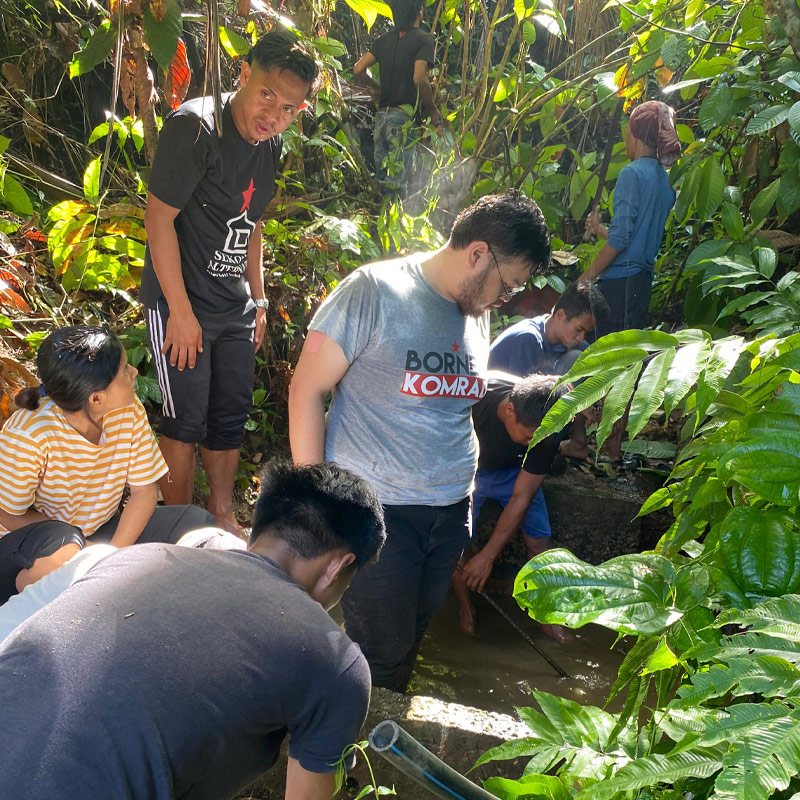
Our walk began along the banks of the Klang River, where we were pleasantly surprised to find the water unusually clear and clean something increasingly rare in urban settings. We even spotted a native fish, a sign that the river remains relatively healthy and capable of supporting aquatic life, despite growing urban pressures. Although we couldn’t identify the species, their presence was encouraging and underscored the river’s ecological value, aligning with SDG 15: Life on Land, which advocates for the conservation of terrestrial ecosystems and biodiversity.
One of the key topics discussed was the Klang Gates Dam also known as Empangan Klang Gates or Bukit Tabur Dam Malaysia’s first modern water-supply dam, built in 1958 to supply clean water. Today, it continues to play a vital role in sustaining the Klang Valley, including Kuala Lumpur. The dam can hold over 25 billion liters of water and channels it to the Bukit Nanas Water Treatment Plant, which processes approximately 145 million liters daily. As we followed the trail, we passed a large water pipe linked to the dam, an impactful reminder of how closely urban life depends on these natural water sources. This supports SDG 6: Clean Water and Sanitation, which emphasizes the importance of accessible and sustainable water management for all.
As we moved along the river, we passed a sewage treatment facility where treated effluent was being released into the water. The contrast between the slightly greyish treated water and the naturally clear flow of the river was stark and raised important questions about the compatibility of infrastructure with the natural environment. It was a sobering moment that highlighted the need for better integration of environmental considerations into urban development. Although the treated water meets certain standards, the visual and ecological impact remains a concern, especially when it disrupts the integrity of ecosystems downstream. This reflects the interconnected challenges of SDG 11: Sustainable Cities and Communities and SDG 14: Life Below Water.
A particularly inspiring part of the walk was observing how nature contributes to riverbank protection. The pokok ara (fig trees) lining the river displayed long, sturdy roots that naturally stabilized the soil and minimized erosion. These trees also provide shade, helping to regulate water temperature and create favorable conditions for aquatic life. Beyond their physical function, fig trees are considered a “keystone species” due to their ecological role producing fruit that sustains a variety of wildlife, including hornbills and, historically, the now-extinct Sumatran rhinoceros. This highlighted how effective, low-cost, and sustainable nature-based solutions can be, in contrast to expensive artificial infrastructure a point urban planners would do well to consider in line with SDG 13: Climate Action and SDG 9: Industry, Innovation, and Infrastructure.
Unfortunately, the walk concluded on a more disheartening note. Approximately 4 kilometers from our starting point, we came upon a section of the river where trash was being openly dumped and untreated wastewater was being discharged both of which are illegal and deeply troubling. These activities not only degrade the environment but also pose serious public health risks, challenging progress toward SDG 3: Good Health and Well-being and SDG 12: Responsible Consumption and Production.
Another issue that stood out was the placement of a Geopark sign intended to highlight the significance of the Klang Gates Quartz Ridge, a unique and internationally recognized geological formation. While the sign aimed to promote awareness and conservation, its location situated near a residential area and adjacent to the sewage facility undermined the message. The poor placement suggested a disconnect between environmental messaging and actual land-use planning, leaving a sense of missed opportunity and inconsistency in how we treat our natural heritage.
I also had a privilege to have this kind of opportunity to work with the local hero (which is Kennedy) and actually experience a hands on local knowledge which is very scarce in today’s technology-driven world where people will have the tendency not to appreciate the gems that we have in our backyard. I had to say, we need the locals and even the Indigenous People and Local Communities (IPLC) to shine and we could learn so much from them. I believe that Kennedy’s energy and his braveness have sparked me to go out beyond of my comfort zone. This will take efforts and braveness to speak up for our local issues.
This visit was a deeply meaningful exploration of both the challenges and potential in managing our natural environment. From the surprising beauty of a clean river and the wisdom of ecological solutions like the pokok ara, to the frustration of seeing preventable pollution, the experience served as a powerful reminder of the urgent need for better planning, stronger enforcement, and greater respect for the ecosystems that sustain us principles that are central to achieving the Sustainable Development Goals.
#artrivercpr #allianceofriverthree #fosktmr3 #foskmvr3 #CANB #CommunityActionNexusBerhad #SDG #SDG12 #SDG3 #tourism #appreciate #local #SDG6 #SDG11 #SDG14 #WalkaboutTalkabout #localtourism #local
Thank you,
Mawaddah binti Badrul Azmi for sharing your experience at Alliance of River Three!

 Contribute to YELL